Call Us

(908) 316-7732

Call Us

(908) 316-7732

Paver Installation & Repair Bridgewater , NJ

Interlock Pavers in Bridgewater New Jersey

Paver Installation & Repair in Bridgewater , NJ

Pavers can look great for years, but when they start sinking, shifting, or filling with weeds, the cause is usually hidden underneath. We find what is going wrong below the surface and fix it at the source, so your pavers can sit level and tight again.

Professional Paver Installation & Repair in Bridgewater, NJ

Ironedge Paving & Masonry installs new paver surfaces and repairs existing ones, from driveways to walkways, for property owners in Bridgewater and across Somerset County.

Let's Talk About Your Project

What Holds a Paver Surface Together

A paver surface is more than the pavers you see. Four parts work together, and a problem with any one of them can show up on top.

Compacted Base

A layer of crushed stone, compacted in lifts, carries the weight of people and vehicles. Its depth depends on how the surface will be used.

Bedding Layer

A thin, even layer of sand or fine aggregate sits on the base and gives each paver a level seat.

Edge Restraint

A firm border along the edges stops pavers from spreading outward over time.

Joint Material

Sand swept into the joints locks the pavers together so they move as one surface. Polymeric sand, which firms up after it is wetted, can also help limit weeds and washout.

Signs Your Pavers Need Repair

Sunken or Low Areas

Dips where pavers have settled, often in wheel paths, near downspouts, or along edges.

Sunken or Low Areas Paver Problems in New Jersey

Shifting or Spreading

Pavers drifting apart or creeping outward at the edges, leaving wider gaps.

Shifting or Spreading Pavers Problem in New Jersey

Washed-Out Joints

Empty or low joints where the sand has been lost to rain, wind, or cleaning.

Washed Out Joint Pavers Problem in New Jersey

Weeds and Moss

Plants and moss growing between pavers, a common sign that joints need attention.

Weeds and Moss Pavers Problem in New Jersey

Loose or Rocking Pavers

Pavers that move or click underfoot, which can become a trip hazard.

Loose or Rocking Pavers Problem in New Jersey

Cracked or Chipped Pavers

Individual pavers broken by heavy loads, impact, or movement in the base.

Cracked or Chipped Paver Problem in New Jersey

What Pavers Sink, Shift, and Loosen

Paver movement does not always mean the paving units themselves are defective. Conditions below and around the surface can influence how it performs. The right repair depends on which of these is at work, which usually takes an on-site look to confirm.

A Thin or Settled Base

If the base was too shallow or not compacted properly, it can settle under use, taking the pavers down with it.

Missing or Failed Edge Restraint

Without a firm edge, pavers gradually spread outward and the joints open up.

Lost Joint Sand

When joints empty out, pavers lose their grip on each other and start to move independently.

Water Getting Underneath

Poor drainage or runoff from roofs and slopes can wash out the bedding layer and soften the base.

Paver Repair and Restoration Options

One advantage of many segmental paver systems is that individual units can sometimes be removed, replaced, or reset without reconstructing the entire area. However, repair suitability depends on more than the condition of the visible pavers.

Lift and Reset

Pavers in the problem area are taken up, the base and bedding are corrected, and the same pavers are relaid level.

Replace Damaged Pavers

Cracked or chipped pavers are swapped out. Older or discontinued pavers can be hard to match exactly, so we discuss the closest options with you.

Edge Restraint Repair

Missing or broken edging is restored to stop further spreading.

Joint Sand Refill

Joints are cleaned out and refilled with fresh sand or polymeric sand to lock the surface back together.

Cleaning and Sealing

Cleaning can refresh the look of pavers, and sealing can help protect some surfaces.

Full Rebuild

When the base has failed across a large area, taking up the whole surface and rebuilding it is often the more lasting choice.

Installing a New Paver Surface

Planning a new patio or walkway? Explore layout and design ideas in Paver Patios & Walkways. Comparing a paver driveway with asphalt or concrete? See Driveway Installation & Repair.

Paver Material

Concrete pavers, clay brick pavers, and natural stone each have a different look, texture, and price.

Pattern

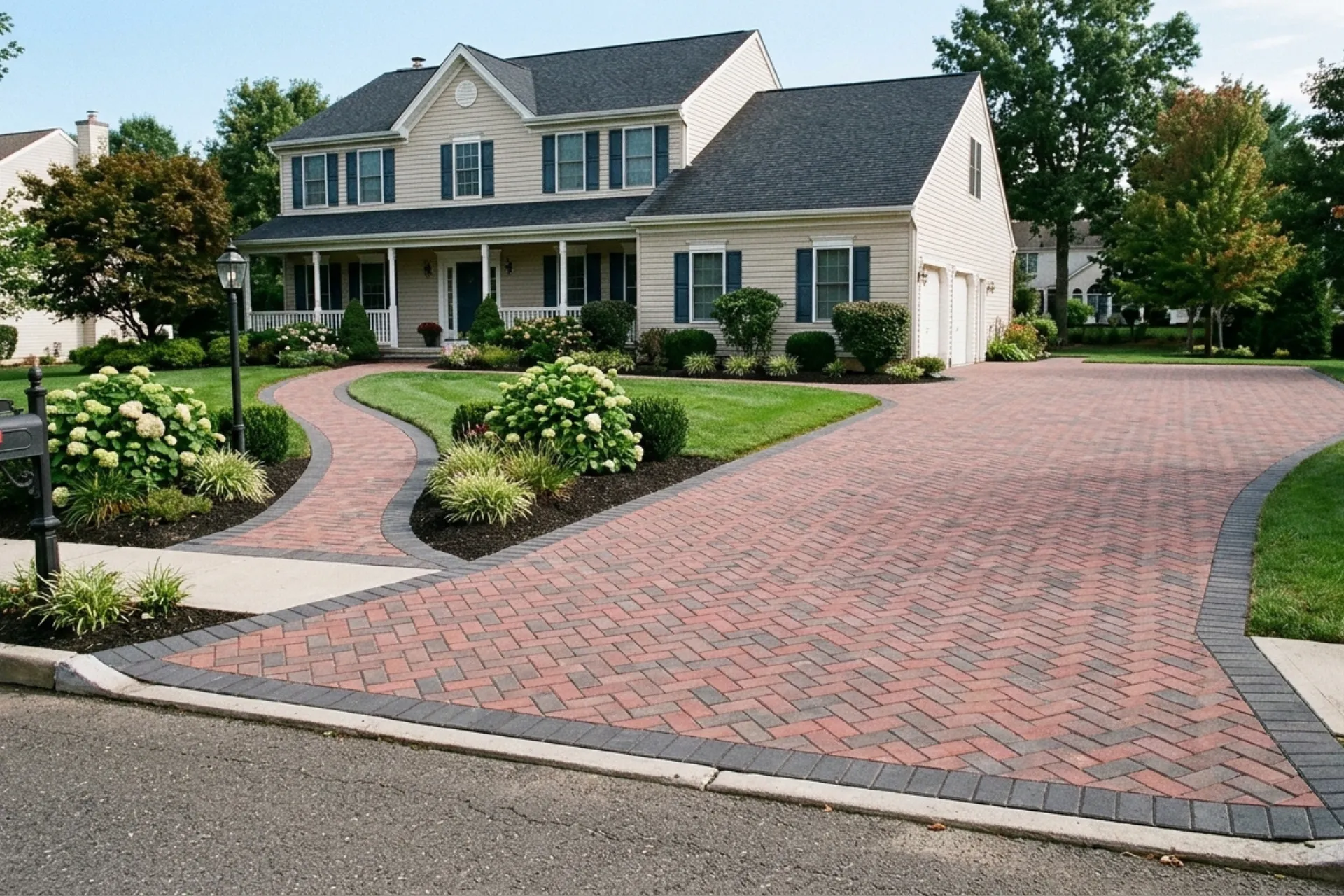
Patterns such as herringbone are often chosen for driveways because the interlocking layout helps resist shifting under vehicles. Other patterns suit walkways and seating areas.

Base Depth

A driveway carrying cars needs a deeper, stronger base than a garden path, so the base is planned around how the surface will be used.

Drainage

A gentle slope and the right edge details help water move off the surface. Permeable pavers, which let water pass through the joints, may also be worth discussing.

Patio Pavers in New Jersey

How a Paver Project Is Done

Inspect the Surface

We check the pavers, joints, edges, and drainage to find the cause of the problem.

Plan the Work

We agree on the repair or layout, materials, and pattern.

Build or Correct the Base

We excavate as needed, then place and compact the base and bedding layer.

Lay and Finish

We set the pavers, secure the edges, compact the surface, and fill the joints.

What Affects the Cost of Paver Work

Area Size

Larger surfaces need more pavers, base material, and labor.

Repair or New Installation

Resetting a small area is a different scope from building a new surface.

Paver Material and Pattern

Material choice and more detailed patterns affect both material and labor.

Base Work

A failed or shallow base may need excavation and new stone.

Matching Existing Pavers

Hard-to-find pavers can affect repair options.

Site Access

Tight spaces and slopes can make the work more involved.

Borders and Details

Borders, curves, and steps add to the scope.

What Homeowners Say About Us

See why homeowners trust IronEdge Paving & Masonry for their masonry, paving, chimney, and foundation projects. We take pride in delivering quality workmanship, reliable communication, and results built to last.

Paver Services Across Bridgewater and Somerset County

We install and repair pavers throughout Somerset County and also work with property owners in Morris, Hunterdon, Essex, and Bergen Counties. Share your address, and we will confirm whether your location is within our service area.

Call Us

(908) 316-7732

20+

Years of Experience

Patios Paving in Bridgewater New Jersey
Patio Pavers Bridgewater New Jersey

Related Paving and Hardscape Services

Whether you’re repairing an existing feature or planning an improvement, we can discuss the type of work involved and the options that may suit your property.

Paver Patios & Walkways

Planning and building outdoor living spaces and paths.

Driveway Installation & Repair

Repair, replacement, and surface options for any driveway.

Front Steps & Stoops Repair

Entry steps that connect to paver walkways.

Retaining Wall Installation & Repair

Walls that support sloped yards around paver areas.

Talk With Us About Your Pavers

Whether a few pavers have sunk or you are planning a new surface, we are glad to help. Send a few details and photos if you have them, and we will discuss the next step.

Let's Talk About Your Project

Paver Installation and Repair Questions

Can sunken pavers be fixed without redoing the whole area?

Often, yes. If the problem is limited to one area, the pavers there can be lifted, the base corrected, and the same pavers relaid.

Can you match my existing pavers?

We try to find the closest match available. Some older or discontinued pavers are hard to match exactly, and new pavers may look slightly different until they weather.

What is polymeric sand, and do I need it?

Polymeric sand is joint sand mixed with binders that firm up after wetting. It can help reduce weeds and washout, but whether it suits your surface depends on the pavers, joint width, and drainage.

Why are weeds growing between my pavers?

Weeds usually take hold when joint sand has washed out or settled, leaving room for seeds and soil. Cleaning the joints and refilling them can help.

Are pavers a good choice for a driveway?

They can be, as long as the base is built for vehicle weight and the pattern suits driving. To compare pavers with other materials, see Driveway Installation & Repair.