(908) 316-7732
(908) 316-7732
Cracks in the foundation or water in the basement are worrying, and the cause usually starts outside the house.
Ironedge Paving & Masonry provides foundation repair in Bridgewater, NJ, tracing where water is coming from, correcting it, and repairing the foundation masonry it has damaged.
The shape and direction of a crack give clues about its cause. This is general guidance only. Any crack that worries you should be looked at in person.
Thin cracks in poured concrete often come from shrinkage as the concrete cured. They are common, but can still let water in.
Cracks running straight up and down are often caused by settling or shrinkage, and are usually repairable.
Cracks that zigzag along mortar joints in block or brick foundations can point to settling or water pressure.
Cracks running sideways, especially with a wall bowing inward, can be a sign of soil pressure. These should be assessed by a structural engineer.
Any crack that is getting wider, or has one side higher than the other, needs prompt professional attention.
Walls feel damp, show dark patches or stay wet after rain.
A white, chalky deposit shows that water is moving through the masonry.
Water seeps in at the base of walls or through cracks during storms.
Mortar in block or stone foundations is soft, sandy or missing.
The ground beside the foundation has settled and now drains toward it.
Water spills over gutters or pools at the foot of downspouts.
Poor drainage, improper grading, clogged gutters, and groundwater pressure can direct moisture toward your foundation, causing leaks, cracks, and masonry damage over time.
Soil that slopes toward the house sends rainwater straight to the foundation.
Downspouts that empty right beside the house soak the soil against the walls.
Overflowing gutters drop water along the full length of the foundation.
Driveways, patios and walkways that slope toward the house carry water to the foundation.
Wet soil presses harder against foundation walls and pushes water through cracks and joints.
Sealing a crack without dealing with the water behind it often means the problem comes back. We work from the outside in.
We check grading, gutters, downspouts and nearby surfaces before looking at the damage.
We correct how water reaches the foundation, so it drains away from the house.
Cracks, joints and damaged masonry are repaired once the cause has been addressed.
The right combination depends on what is causing the problem. After assessing your property, we explain which options fit.
Non-structural cracks are sealed to stop water coming through.
Worn mortar in block and stone foundations is cut out and replaced. Learn more about brick repointing and mortar joint repair.
Cracked or flaking parging on the exposed foundation is removed and replaced.
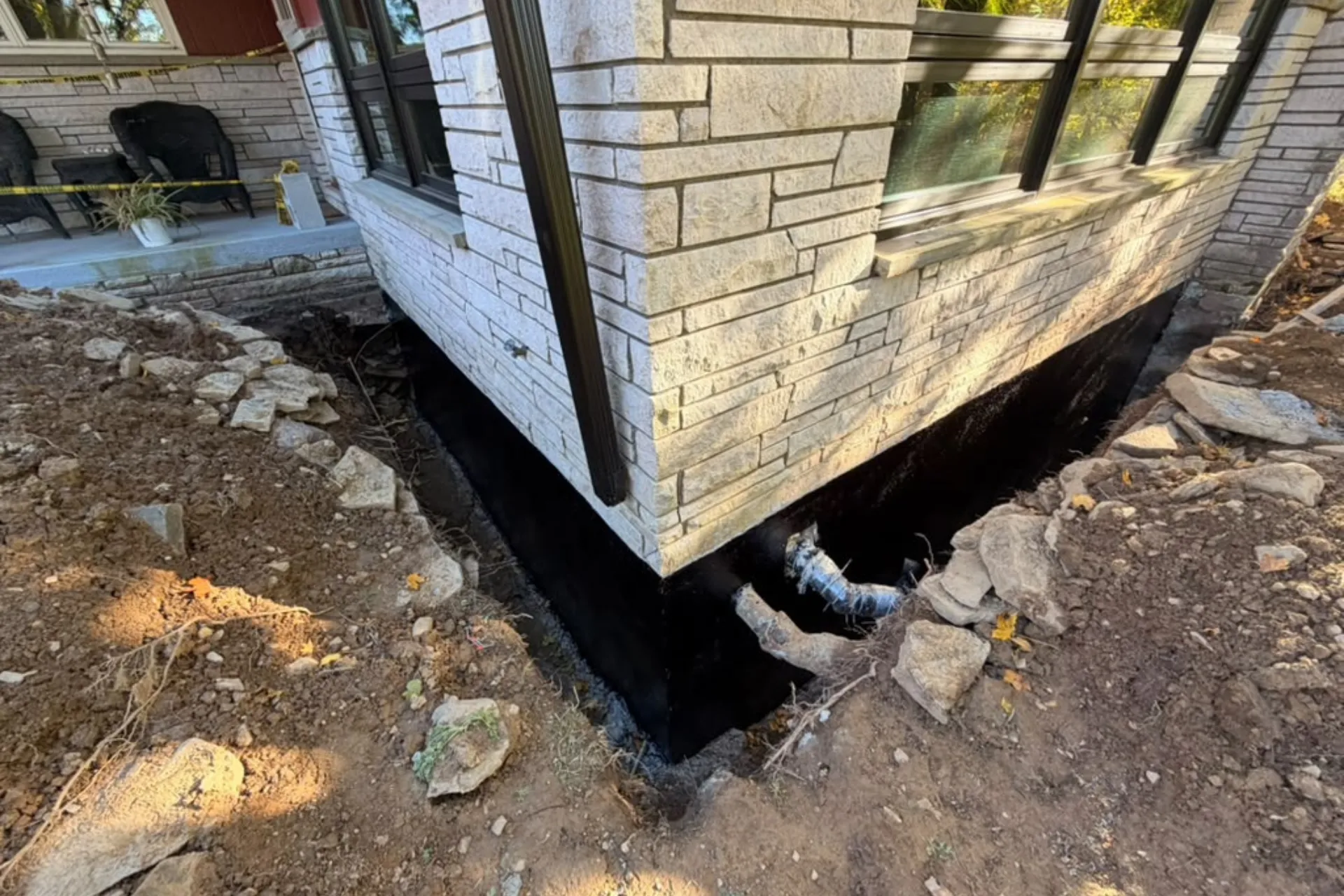
The outside of foundation walls is treated to resist water where it can be reached.
Soil beside the house is regraded so water drains away from the foundation.
Downspouts are extended or redirected to carry roof water away from the walls.
Some foundation problems need a different specialist. We’ll tell you plainly when that’s the case.
For horizontal cracks, bowing walls or major movement, we recommend an assessment by a structural engineer first.
We look at the foundation, the basement and the ground around the house.
We identify where water is coming from and how it reaches the walls.
We explain what we recommend, what it involves and anything outside our scope.
The agreed work is completed and we walk through it with you.
A downspout extension costs far less than regrading or waterproofing a full wall.
How many cracks need repair and how long they are.
Poured concrete, block and stone foundations each need different repairs.
Decks, patios, plantings or steps next to the foundation can make the work harder to reach.
Exterior waterproofing may require digging along the wall.
Surfaces that drain toward the house may need correcting too.
See why homeowners trust IronEdge Paving & Masonry for their masonry, paving, chimney, and foundation projects. We take pride in delivering quality workmanship, reliable communication, and results built to last.
Ironedge Paving & Masonry is based in Bridgewater and helps homeowners across Somerset County with foundation cracks and basement water.
Heavy rain, clay soils and older block foundations make drainage problems common here. We also serve in Morris, Hunterdon, Essex, and Bergen Counties. Share your address, and we will confirm whether your location is within our service area.
(908) 316-7732
Years of Experience
Whether you’re repairing an existing feature or planning an improvement, we can discuss the type of work involved and the options that may suit your property.
Planning and building outdoor living spaces and paths.
Repair, replacement and surface options for driveways of every material.
Repairs to damaged brick, block and stone, plus new walls, pillars and features.
Walls built with proper drainage to hold back soil on sloped lots.
Tell us what you’re seeing, whether it’s cracks, damp walls or water after storms. We’ll look at the foundation and the ground around it, explain the likely cause and what can be done.
Water that appears only during storms usually points to an outside cause, such as overflowing gutters, short downspouts or soil sloping toward the house. Correcting how water drains around the foundation is often the first step.
In many cases it helps a great deal, because most basement water starts outside. It may not solve every problem, especially where groundwater is high, and we'll tell you if other work is likely to be needed.
Usually the drainage. If water keeps reaching the foundation, repaired cracks are more likely to leak again. Fixing the water path first gives crack repairs the best chance of lasting.
If you see horizontal cracks, walls bowing inward, cracks that are widening or doors and windows that have started sticking, a structural engineer should assess the foundation first. We can carry out the masonry and drainage work their report recommends, where it's within our scope.
It's called efflorescence: salts left behind when water moves through masonry and evaporates. It isn't harmful in itself, but it shows that water is getting into the wall, which is worth looking into.