(908) 316-7732
(908) 316-7732
Your front steps are the first thing visitors use and the last thing you want to worry about.
Ironedge Paving & Masonry provides front steps repair in Bridgewater, NJ, fixing loose treads, cracked brick and sinking stoops so every trip to the door feels steady.
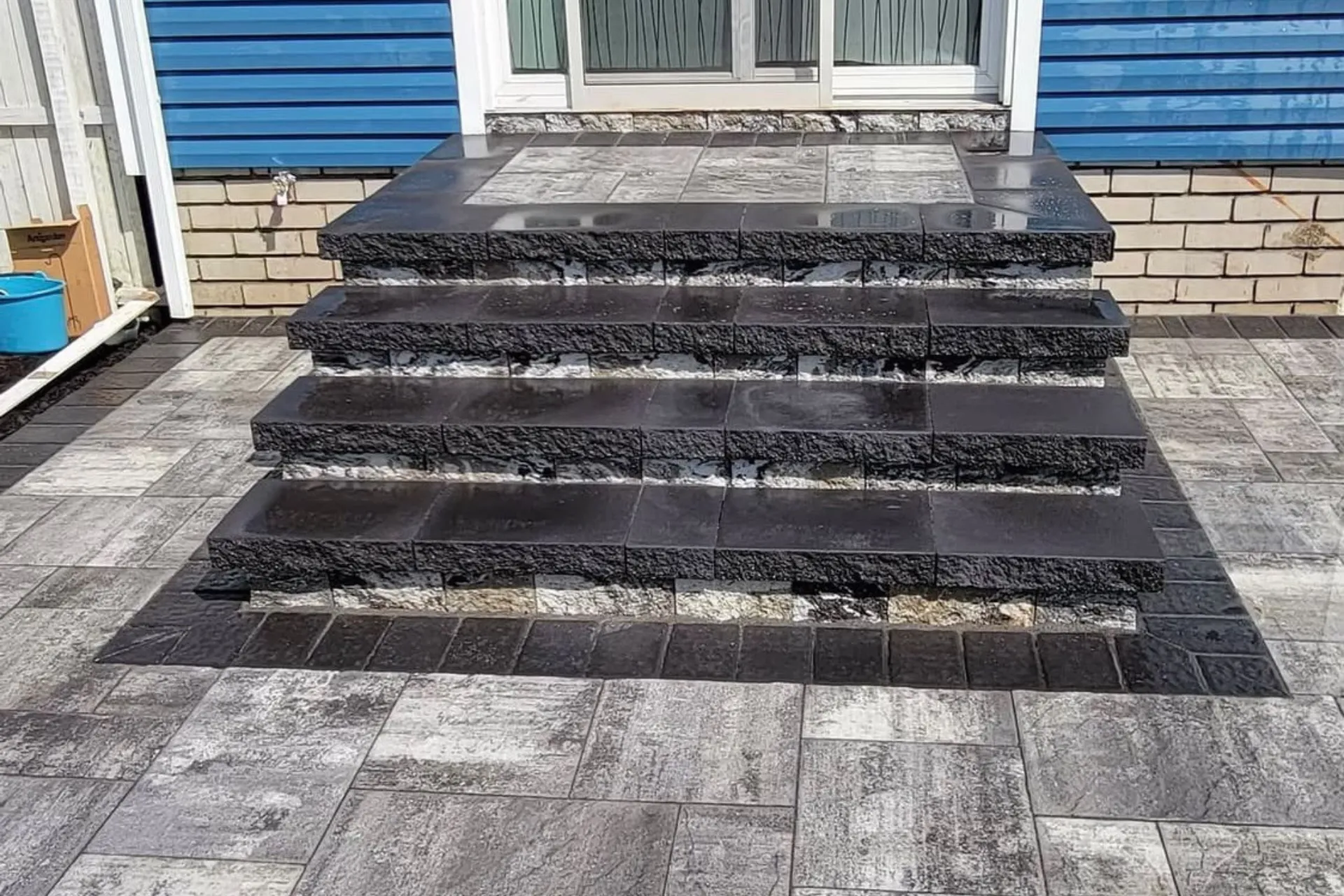
Knowing the parts of a step makes it easier to see where a problem starts and what the repair involves. Most front steps and stoops are built from brick, stone, concrete or a mix of these.
The flat surfaces you step on. Loose or cracked treads are the most common safety problem.
The vertical faces between treads. Cracks and open joints here let water into the step.
The platform at the top, in front of the door. It carries the most foot traffic.
The foundation under the steps. When it settles or shifts, everything above it moves too.
Railings anchored into the masonry. Damaged masonry around the anchors can leave them loose.
Step problems tend to get worse each winter. These are the signs worth acting on.
A tread or cap stone moves when you step on it.
Cracks run across the brick, stone or concrete surfaces.
A gap is opening between the steps and the house.
The steps lean, slope toward the house or sit lower than they did.
Mortar between bricks or stones is missing, crumbling or cracked.
Railing posts wobble because the masonry around them has broken down.
Front steps sit outside all year with no roof over them, so they take the full force of New Jersey weather.
Water in the soil under the steps freezes, lifts the base and lets it drop again when it thaws.
Soil under the steps compacts over time, especially next to a newer house where the ground was backfilled.
Gutters and downspouts that empty near the steps keep the base and joints wet.
Salt used in winter speeds up the breakdown of brick, stone, concrete and mortar.
We repair cracked, loose, and uneven front steps and stoops, restoring stability, improving safety, and enhancing your home’s entrance.
Loose treads and cap stones are lifted, cleaned and reset in fresh mortar.
Cracked or flaking brick and stone are replaced with the closest available match.
Worn mortar is cut out and replaced. Learn more about repointing loose step joints.
Cracks and broken edges on concrete steps are repaired where the base is sound.
Where the base has failed, steps and stoops are taken down and rebuilt on a new base.
Railing posts are reset into repaired masonry so they hold firm.
Not every damaged step needs replacing. The deciding factor is usually the base: if it is sound, the surface can often be repaired.
We explain which option fits your steps and why before any work starts.
We check the surfaces, joints, base and how the steps meet the house.
We tell you whether repair or rebuilding fits and what each involves.
The agreed repair or rebuild is carried out, with materials matched as closely as possible.
We walk the finished steps with you and explain when they're ready to use.
Step repairs are priced on the work your steps actually need. These are the main factors.
A two-step stoop is a different job from a full flight with a landing.
Brick, stone and concrete each involve different repair methods and costs.
A few loose treads cost far less than widespread cracking.
A failed base usually means rebuilding rather than repair.
Taking down old steps adds labor and disposal.
Resetting or replacing railing anchors, where needed.
See why homeowners trust IronEdge Paving & Masonry for their masonry, paving, chimney, and foundation projects. We take pride in delivering quality workmanship, reliable communication, and results built to last.
Ironedge Paving & Masonry is based in Bridgewater and repairs front steps and stoops for homes across Somerset County.
Years of frost, rain and winter salt take a toll on entry steps here, and loose treads and settling stoops are common repairs. We also serve Morris, Hunterdon, Essex, and Bergen Counties. Share your address, and we will confirm whether your location is within our service area.
(908) 316-7732
Years of Experience
Whether you’re repairing an existing feature or planning an improvement, we can discuss the type of work involved and the options that may suit your property.
Worn mortar joints repaired with mortar suited to your brick.
Repairs to damaged brick, block and stone, plus new walls, pillars and features.
New paver walkways that lead safely from the driveway to your front steps.
Walls designed to hold back soil on sloped ground.
Whether it’s a loose tread, a crack or a stoop that has started to sink, we’ll take a look and explain whether repair or rebuilding is the right fix.
Usually the base under the steps has settled, or frost has moved it. Steps built without a proper footing or tie to the house are more likely to separate. The fix depends on how far they've moved, and we'll check the base before recommending repair or rebuilding.
Often, yes. If the base is solid and the steps haven't shifted, loose bricks and treads can be reset in fresh mortar. If the bricks keep coming loose because the base is moving, a rebuild is usually the better long-term fix.
For small repairs, you may only need to avoid part of the steps for a short time. For larger repairs or rebuilds, the steps need time to set before they're used, so another entrance may be needed. We'll let you know what to expect before work begins.
Sometimes, if the concrete steps are solid and the added height still leaves even, safe steps at the door. We'll check the existing steps and the door threshold before recommending it.
When a railing is loose because the masonry around its posts has broken down, the masonry can be repaired and the posts reset.