(908) 316-7732
(908) 316-7732
Your chimney stands above the roofline, exposed to rain, wind, and winter weather on every side. Over time, mortar crumbles, bricks loosen, and the crown cracks, letting water into the masonry. We repair the exterior brick, mortar, and crown so your chimney can shed water and stand solid again.
Ironedge Paving & Masonry repairs chimney masonry for homeowners in Bridgewater and across Somerset County.
We repair damaged chimney bricks, mortar joints, crowns, caps, flashing, and other exterior components to help prevent water damage and maintain structural stability.
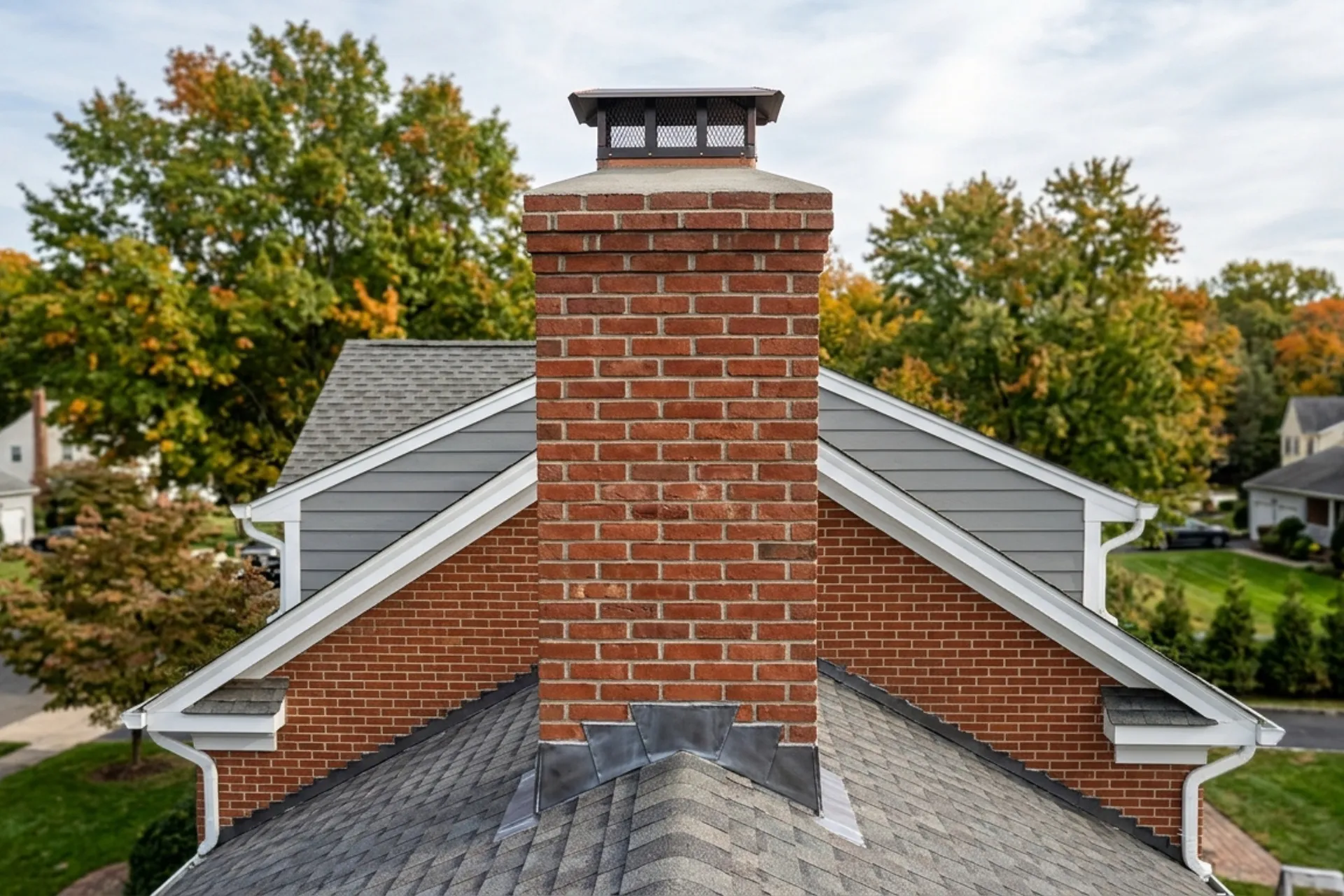
The sloped cap of concrete or mortar at the top of the chimney. It sheds water away from the brick, and cracks in it let water straight into the masonry below.
The outer shell of the chimney. Damaged, loose, or flaking bricks weaken the structure and let in moisture.
The mortar between the bricks holds them together and keeps out water. Because chimneys are so exposed, these joints often wear faster than the mortar on the rest of the house.
The lower section where the chimney meets the house or steps inward. Water and settlement can show up here as cracks or loose brick.
Recessed, sandy, or empty joints between the bricks.
Bricks that have shifted, split, or lost their outer face.
Visible cracks or broken pieces at the top of the chimney.
Pieces of brick or mortar collecting on the roof, in gutters, or on the ground.
A white, chalky residue on the brick, which shows moisture moving through the masonry.
A chimney that appears to tilt can indicate a structural problem and should be checked promptly.
Because these causes often work together, we look at the whole chimney before recommending a repair.
Above the roofline, a chimney is exposed on all four sides, so it goes through more wetting, drying, freezing, and thawing than most walls of a house.
When the crown cracks, water runs directly into the top of the chimney and works its way down through the brick and mortar.
Moisture that gets into the masonry freezes in winter, which can push mortar out of the joints and break the faces off bricks.
Mortar that is too hard for older brick can cause the brick itself to crack and flake. Learn more about choosing compatible mortar.
The appropriate method depends on the condition of the masonry, how it is supported, the intended use, and whether the damage is localized or extensive.
Deteriorated mortar is removed to a consistent depth and replaced with fresh mortar suited to the brick, sealing the joints against water.
Cracked, loose, or flaking bricks are removed and replaced with the closest available match.
Small cracks in a sound crown can sometimes be repaired. A badly cracked or poorly shaped crown may be rebuilt with a proper slope and overhang to throw water clear of the brick.
When bricks are loose across a large area, usually near the top, the chimney can be taken down to sound masonry and rebuilt.
A breathable, masonry-specific water repellent can help reduce water absorption after repairs.
We focus on the masonry on the outside of your chimney.
If you use your fireplace or have appliances venting through the chimney, have the flue inspected by a qualified chimney professional.
We look at the brick, mortar, and crown, using safe roof access where needed.
We match the mortar and brick as closely as possible and agree on the scope.
We repoint, replace brick, or repair the crown as agreed.
We clear debris from the roof and grounds and show you the finished work.
Taller chimneys and steeper roofs take more time and equipment to work on safely.
Some chimneys need scaffolding or roof staging.
Repairing a crown differs from rebuilding one.
Spot repointing costs less than repointing the whole chimney.
Sourcing brick to match an older chimney can affect cost.
Partial rebuilds depend on how much masonry has to come down.
See why homeowners trust IronEdge Paving & Masonry for their masonry, paving, chimney, and foundation projects. We take pride in delivering quality workmanship, reliable communication, and results built to last.
We repair chimney masonry throughout Somerset County and also take on chimney work in Morris, Hunterdon, Essex, and Bergen Counties. Share your address, and we will confirm whether your location is within our service area.
(908) 316-7732
Years of Experience
Whether you’re repairing an existing feature or planning an improvement, we can discuss the type of work involved and the options that may suit your property.
Mortar joint repair for brick walls throughout your home.
Repairs and new work for brick, block, and stone features.
Repairing or rebuilding damaged entry steps.
Walls designed to hold back soil on sloped ground.
Noticed loose bricks, crumbling mortar, or a cracked crown? We are glad to take a look and talk through your options. Send a few details and photos taken from the ground if you have them.
There is no fixed schedule. It depends on the original mortar, the brick, and how exposed the chimney is. Checking the joints from the ground every year or so, especially after a harsh winter, helps catch wear early.
It can, if the water is coming through cracked mortar, damaged brick, or the crown. Leaks can also come from flashing, caps, or the roof itself, so the source needs to be found first.
A cracked crown lets water into the top of the chimney, which can speed up damage to the brick and mortar below. Small cracks can sometimes be repaired; larger ones may call for a new crown.
No. Our chimney work focuses on exterior masonry. For flue liners, caps, and inspections, we recommend a qualified chimney professional.
Often, yes. If the damage is concentrated above the roofline and the masonry below is sound, the upper section can be rebuilt without taking down the whole chimney.