(908) 316-7732
(908) 316-7732
A retaining wall holds back tons of soil, so when one starts to lean, bulge or crack, it needs attention before it gets worse.
As a retaining wall contractor in Bridgewater, NJ, Ironedge Paving & Masonry repairs failing walls and builds new ones, starting with the drainage and base that keep a wall standing.
The part of a retaining wall you see is only half the story. What sits behind and below it decides how long it lasts.
A compacted base below ground level gives the wall a firm, level start.
Gravel backfill and a drain let water escape, so pressure doesn't build up behind the wall.
Many walls lean slightly back into the slope, using their own weight to resist the soil.
Taller walls often need reinforcement built into the soil behind them, and may need an engineered design.
Retaining walls usually fail slowly, then quickly. These signs mean the wall is under strain.
The top of the wall is moving forward, away from the slope.
The middle of the wall is pushing out further than the top and bottom.
Cracks or open gaps are appearing between blocks or stones.
Blocks, stones or caps have shifted or come off the wall.
Soil or gravel is coming out through joints or around the base.
Water pools behind the wall or seeps out at the bottom after rain.
Poor drainage, weak foundations, soil pressure, and improper construction can cause retaining walls to crack, lean, bulge, or collapse over time.
Wet soil is much heavier than dry soil. Without a way out, water pushes hard against the back of the wall.
Many older walls were built with no gravel backfill or drain behind them.
A base that was too shallow, not compacted or built on soft soil lets the wall settle and tip.
A wall built taller than its design allows, without reinforcement, can't resist the load.
Tree roots, driveways, sheds or parked cars near the top of the wall add pressure it wasn't built for.
Retaining wall repair only lasts if it deals with why the wall moved. After assessing the wall, we explain which option fits.
Where one part of the wall has failed, that section is taken down and rebuilt on a proper base.
Gravel backfill and drainage are added or restored behind the wall during the repair.
Loose, cracked or missing blocks and caps are reset or replaced.
When most of the wall has moved or the original design was inadequate, a new wall is the better long-term fix.
Rotting timber walls are removed and replaced with block or stone.
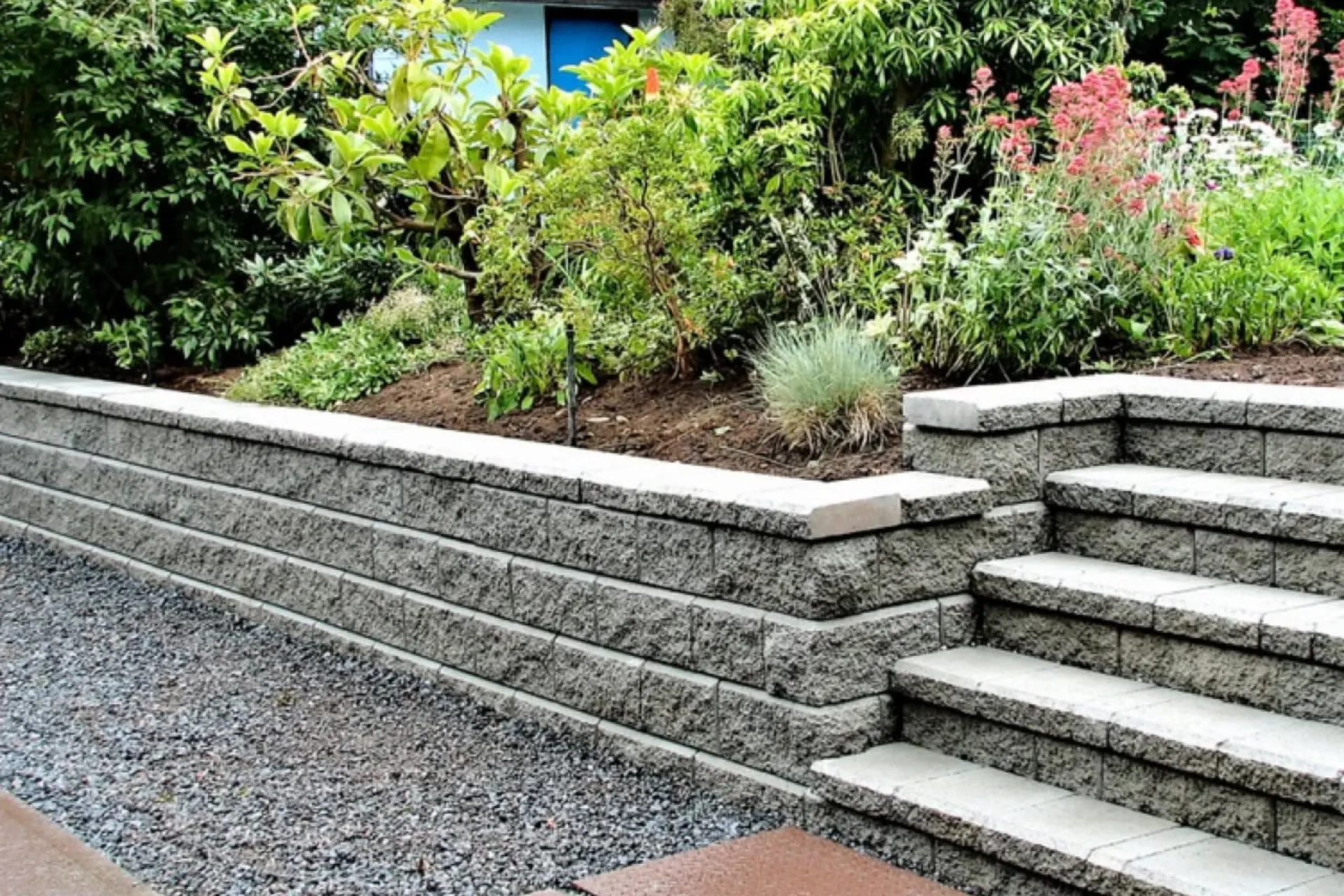
A new retaining wall can turn a steep or eroding slope into usable, level ground.
Create flat space for lawn, play or a patio. See planning a patio on a sloped yard.
Step a slope into planted terraces that hold soil and stop erosion.
Hold back soil beside driveways and paths cut into a slope.
Stop soil washing down a bank onto lawns, patios or the driveway.
Segmental Concrete Block, Natural Stone and other materials poured or veneered walls, where suited to the site.
We look at the wall, the soil, the slope and where water goes.
We tell you why the wall moved, or what a new wall needs, and the options.
The base, drainage and wall are built or repaired to the agreed plan.
We walk the finished wall with you and point out how water drains.
Taller and longer walls need more material, excavation and labor.
Block, stone and other materials vary in price and installation time.
The amount of gravel backfill and drainage the site needs.
How easily equipment can reach the wall.
Taking down and hauling away a failed wall.
Design and permit costs for taller walls, where required.
See why homeowners trust IronEdge Paving & Masonry for their masonry, paving, chimney, and foundation projects. We take pride in delivering quality workmanship, reliable communication, and results built to last.
Ironedge Paving & Masonry is based in Bridgewater and repairs and builds retaining walls for homes across Somerset County.
Many properties in the area sit on sloped lots or heavy soils that hold water, which puts extra pressure on walls. We also serve in Morris, Hunterdon, Essex, and Bergen Counties. Share your address, and we will confirm whether your location is within our service area.
(908) 316-7732
Years of Experience
Whether you’re repairing an existing feature or planning an improvement, we can discuss the type of work involved and the options that may suit your property.
Patios and paths planned around how you use your yard.
Repair, replacement and surface options for driveways of every material.
Repairs to damaged brick, block and stone, plus new walls, pillars and features.
Help with cracks, damp basements and water near the foundation.
Tell us what your wall is doing, or what you’d like a new wall to achieve. We’ll take a look, explain the cause or the options, and set out what the work involves.
Sometimes. If the lean is limited to one section and the cause can be fixed, that section can often be rebuilt. If the whole wall is leaning or the original design was too weak, replacing it is usually the better choice. We'll explain which applies after looking at the wall.
Â
Water makes soil heavier and pushes against the wall. Gravel backfill and a drain give that water a way out, which reduces the pressure. Poor drainage is one of the most common reasons retaining walls fail.
It depends on the wall's height, what it holds up and your town's rules. Taller walls, and walls supporting driveways or buildings, often need an engineered design. We'll check what applies to your project during planning.
It depends on the wall's length, height, material and site access, as well as the weather. A short garden wall is a much quicker job than a tall wall that needs drainage and reinforcement. We'll give you an expected timeline once the scope is agreed.
Yes, and the two are often planned together, with the wall creating the level ground the patio sits on. The wall's design needs to account for the patio and anything placed on it.